Student Spotlight:
Troy Muehlbauer
What makes Washington State University’s Voiland College of Engineering and Architecture stand out from the crowd for those looking to get a degree?
We ask computer science major Troy Muehlbauer for his thoughts on what makes WSU such a special place.

- Major: Computer Science
- Expected Date of Graduation: Fall 2027
- Highschool: Columbia High School
- Hometown: White Salmon, Washington
What made you decide to attend WSU?
WSU was never a backup. It was the choice. As a third-generation Coug with deep roots in Pullman, staying in-state wasn’t just a decision, it was a legacy I wasn’t about to break. I spent my first year digging through everything the Voiland College of Engineering and Architecture had to offer before locking in on computer science, a field that hits every note I care about: problem-solving, technology, and the rush of building something out of nothing. Since then, WSU’s computer science program has opened doors I didn’t even know existed. I’ve TA’d, taken on leadership roles in STEM organizations, and built real relationships with professors who actually care whether their students win. Every step has pushed me further, and landing this summer’s internship is proof that the work I’ve put in here is taking me exactly where I want to go.
What has been your favorite class or program that you have been involved with at WSU?
A few classes at WSU genuinely shaped who I am as an engineer. The two intro CS courses, CPTS 121 and 122, hit harder than I expected. The foundations they drilled into me have shown up again and again, both throughout my degree and during my internship this summer. It’s wild how often the “basics” end up being the difference-maker. CPTS 223, the main data structures and algorithms course, is another one I came to love. It’s the class that got me cracked at LeetCode, which if you don’t know, has basically become the gatekeeper of the entire tech industry. If you want to land internships and full-time offers, you need to be sharp on DSA, and 223 sets that foundation. What made these classes hit even harder was the professors behind them. They didn’t just lecture and disappear. When I hit walls, and I definitely did, they took the time to actually work through it with me. That kind of investment is rare, and it’s a big reason I’ve made it this far.
What clubs are you involved in on campus?
I joined the Software Development Club as a clueless second-year CS student last fall. I had no clue what real full-stack development looked like on a modern stack, and I struggled to keep up for the first few months. But I kept showing up. Day after day, project after project, I started to understand how real software actually gets built from scratch, not just how it looks in a textbook. That experience ended up being the single biggest reason I felt ready when I walked into my internship this summer. I enjoyed it so much that I ran for Vice President and will be leading the club through the next academic year. Here’s my biggest takeaway: coursework builds the wide foundation and teaches you how to think, but clubs like the Software Development Club are where the real technical edge gets sharpened. The two work together, and you can’t skip either one. A student who lives in the textbooks but never builds anything won’t make it. Neither will the one who builds without ever learning the fundamentals. You need both, and clubs are where the second half actually happens. The opportunities are there for a reason. If you’re serious about tech, you show up and take them.
Have you participated in any internships related to your field of study?
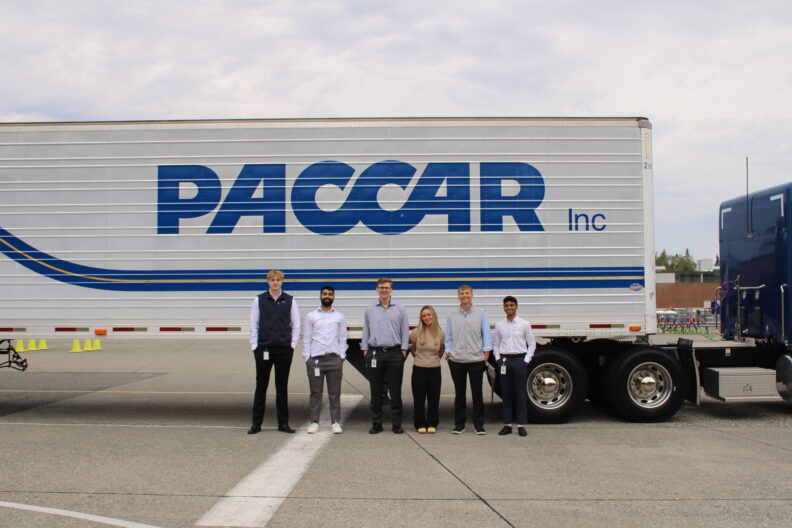
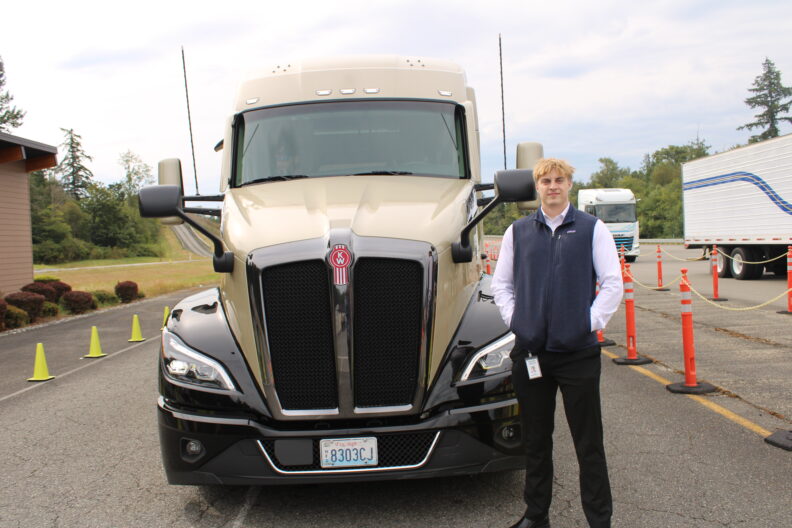
This summer, I wrapped up my first major internship at PACCAR as a DevOps cloud engineer, and it was easily one of the most defining experiences of my career so far. Over 12 weeks, I got to work on real infrastructure that real people at a Fortune 500 company depend on. I shipped four production-track projects, ranging from full-stack applications to backend services that automated processes previously being done by hand. One of them alone is on track to save the company around $90,000 a year. Getting to see my code deployed to production, actually running and affecting how business gets done, was surreal. But none of it came easy. There were long days spent buried in my little intern notebook, sketching out flowcharts and untangling problems that seemed impossible at first. Some mornings I walked in frustrated by a bug I couldn’t crack the night before. Every time I pushed through, though, the payoff hit harder than the last. That’s the loop that makes this work addicting. I met some of the most talented engineers I’ve ever been around, learned more in three months than I thought possible, extended my internship, and walked out with a return offer for next summer. None of it came from coasting. All of it came from staying curious and refusing to settle. The foundation I’ve built at WSU got me here. Now I’m heading into my final semesters knowing exactly what I’m working toward.
Why would you recommend attending Washington State University?
If you’re an aspiring engineer who wants to actually build something out of your college years, Washington State University deserves a serious look. It’s not MIT, and it doesn’t need to be. What WSU offers is a program that gives you real resources, real mentorship, and real opportunities, as long as you’re willing to put in the work to take advantage of them. The environment here is built for growth. Class sizes are small enough that professors actually know your name and want to see you succeed. Clubs like the Software Development Club, the LeetCode Club, and ACM-hosted hackathons keep you sharp and surround you with people who push you to get better. And the Coug alumni network is genuinely powerful, opening doors at companies you wouldn’t expect from a school our size. WSU isn’t going to hand you a career. But if you show up with drive, the opportunities are absolutely here to build one. That’s what makes this program worth it.
What advice do you have for fellow or prospective students?
For incoming engineering students, my advice is simple: get involved, and do it now. Just showing up to class and going home was never the point. If that’s all you want, save your money and get an online degree. The best thing you can do for yourself and your future career is stay curious, stay ambitious, and stay hungry. Anything worth being good at takes time, and engineering is no exception. Jump on opportunities early, chase the hard problems, and give everything you’ve got. The students who win here aren’t the smartest ones in the room, they’re the ones who refuse to coast.
Is there anything else you’d like to mention about your experience at WSU?
College is a journey, and mine was anything but linear. My first two years at WSU, I felt completely lost. I didn’t have a plan for the future, I hadn’t built a real community, I was watching the tech job market seemingly disappear overnight, and on top of all of it, I was dealing with some serious health issues. Those kinds of stretches can either break you or become the exact thing that shapes you. I chose the second path, but not all at once. I started small. I talked to my classmates. I talked to my professors. I started paying attention to the opportunities around me, the ones that aren’t always obvious until you’re actually looking for them. Slowly, I found the first few keys. Each one unlocked a door that held bigger keys behind it. That’s how it built. Somewhere along the way, I realized something that changed everything: my tuition doesn’t just pay for classes. It pays for every single opportunity surrounding me on this campus. The clubs, the professors, the network, the resources. All of it. Most students never fully cash in on what they’ve already bought. So here’s my parting advice: don’t spend four years just passing classes. Strive for more. Be involved, be ambitious, be curious. It’ll take you further than you can imagine, just like it has for me.