Meet the newest faculty members joining Voiland College for the 2025–26 academic year.

Tareq Abuimara
Assistant Professor, School of Design and Construction.
Tareq Abuimara’s professional experience spans over 20 years of teaching, research, and the building design and construction industry in both North America and the Middle East. His teaching experience involved teaching courses in the areas of Architectural Structures, Building Construction, Sustainable Design, and Building Science. Abuimara’s research has been focused on developing methods to improve the performance of buildings throughout the building lifecycle (design, construction, and operation). Additionally, Abuimara has several years of industry experience including design, construction and project management of residential, commercial, and healthcare facilities.
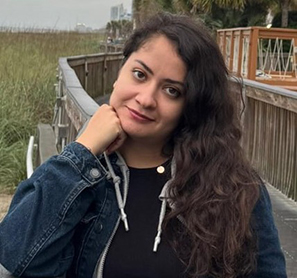
Asma Jodeiri Akbarfam
Assistant Professor, School of Engineering and Applied Sciences.
Asma Jodeiri Akbarfam specializes in blockchain, federated learning, and intrusion detection systems. Her research focuses on designing secure, scalable, and modular frameworks—such as blockchain-based systems—that enhance data provenance, access control, and privacy in decentralized and federated environments while integrating Universal Composability proofs to ensure rigorous security guarantees. Prior to joining Washington State University Tri-Cities, she was a research assistant at Augusta University. She also served as the co-founder and Vice President of the Women in Cybersecurity (WiCyS) chapter at Augusta University. She earned her Ph.D. in Computer and Cyber Sciences from Augusta University, a master’s degree in Computer Engineering from Sharif University of Technology, and a bachelor’s degree in Computer Engineering from the University of Tabriz.
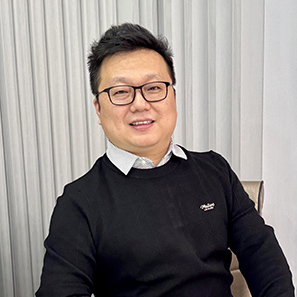
Bin Cao
Associate Professor, Gene and Linda School of Chemical Engineering and Bioengineering.
Cao’s research group is dedicated to tackling key challenges in sustainability and health through synthetic bioengineering. Specifically, his work centers on applying tools from molecular and synthetic biology, integrated with engineering principles, to design novel microbial systems and bioprocesses or enhance existing ones across multiple scales, from DNA and proteins to microbial communities. These efforts are aimed at developing innovative solutions to pressing environmental and health issues, such as removing emerging contaminants, recovering critical resources, promoting sustainable biomanufacturing, and combating antimicrobial resistance. Cao joins the faculty at Washington State University from Nanyang Technological University in Singapore. He earned his Ph.D. in Chemical and Biomolecular Engineering from the National University of Singapore. In 2024, he was named a Fellow of the Royal Society of Chemistry (FRSC).
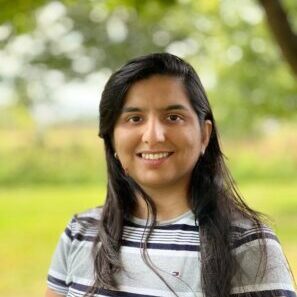
Charul Chadha
Assistant Professor, School of Mechanical and Materials Engineering.
Chadha’s research centers on the design and manufacturing of bio-inspired architectures, the advancement of additive manufacturing processes, and the development of sustainable repair strategies for high-performance polymers. Her work investigates variations in the material properties of additively manufactured components and explores how inherent defects can be leveraged in the design process to enhance performance. Drawing inspiration from biological systems, she aims to create robust architectural materials with improved durability and sustainability. She holds a Ph.D. in Mechanical Science and Engineering and an M.S. in Aerospace Engineering from the University of Illinois Urbana-Champaign.
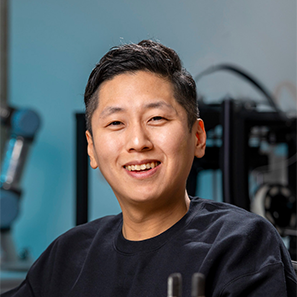
Jaechang Ko
Assistant Professor, School of Design and Construction.
Jaechang Ko is a designer and researcher whose work investigates how machine intelligence can engage with architectural aesthetics and design cognition. He received his Ph.D. in Architecture from Texas A&M University, where his dissertation examined architectural style as a pattern of aesthetic decisions shaped by visual features and cognitive perception. He thinks that making these patterns computable offers a way to support designers through interpretable and generative tools in the AI era.
Before returning to academia, Ko spent nearly a decade in professional practice, working at firms in South Korea and the United States, including Lake Flato and Gensler. He contributed to commercial, entertainment, and cultural projects, serving as a project lead designer and BIM coordinator. These experiences continue to inform his research, grounding computational investigations in the realities of design production.
His teaching equips students with the skills to represent the world as data objects, extract actionable insights, transform these insights into discoveries and decisions, and create artificially intelligent systems that automate tasks and decisions historically requiring human cognition. His research has been published in Automation in Construction and presented at venues such as the Design Computing and Cognition conference.
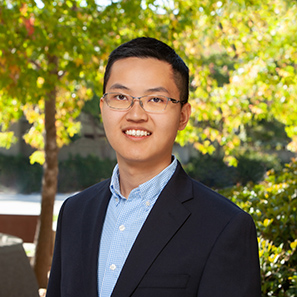
Leon Li
Assistant Professor, School of Electrical Engineering and Computer Science.
Leon Li’s research focuses on hardware security and reliability, particularly in protecting integrated circuits from supply chain risks and reverse engineering threats. Before joining WSU, he was pursuing his Ph.D. at UC San Diego, where he also earned his bachelor’s and master’s degrees. His work includes developing reverse engineering analysis methods, logic obfuscation techniques, and secure testing solutions for hardware control systems.
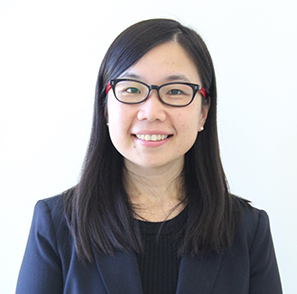
Di Liu
Assistant Professor, School of Design and Construction.
Di Liu serves as an Assistant Professor of Construction Management in Washington State University’s School of Design + Construction, having joined the faculty in August 2025. She earned a Ph.D. in Construction Science from Texas A&M University with her dissertation on Cognition-Based Human Performance Analysis and Modeling for Collaborative Teleoperation in Challenging Construction Environments. Before joining WSU, she completed post-doctoral research at the University of Florida.
Drawing on several years of professional practice in the architecture and construction industry, Liu pursues research on human-autonomy collaboration, human-agent Teaming, VR-assisted construction operation, and practitioner-oriented knowledge-management systems in construction. Her research has been supported by active partnerships with Haskell Construction and the NSF I-Corps program.
Liu’s scholarship appears in Automation in Construction, the Journal of Architectural Engineering, and proceedings of the ASCE International Conference on Computing in Civil Engineering (i3CE) and the International Association for Automation and Robotics in Construction (IAARC). At WSU, she founded the H×Acon (Human × Autonomy Construction) research group, advancing Human Autonomy Co-intelligence in complex project environments.
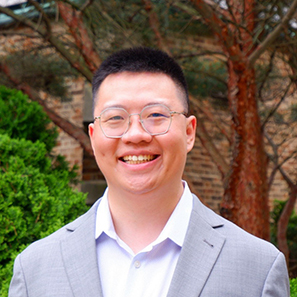
Mengyu Liu
Assistant Professor, School of Engineering and Applied Sciences.
Mengyu Liu specializes in research on the intersection between machine learning, security and formal methods. Prior to joining Washington State University Tri-Cities, he served as a graduate research assistant at the University of Notre Dame, focusing on cyber-physical systems with safety and time constraints. He holds a Ph.D. from the University of Notre Dame, a master’s degree from Syracuse University, and a bachelor’s degree in computer science from the University of Toronto in Canada.
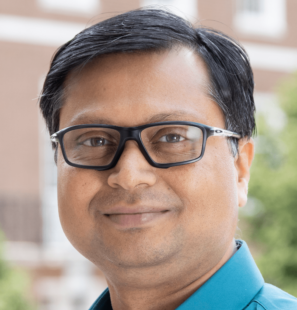
Nilanjan Mitra
Associate Professor, School of Mechanical and Materials Engineering.
Mitra’s research focuses on the physics and chemistry of materials to tackle critical challenges in defense, space, and nuclear applications. His group investigates metals, ceramics, polymers, composites, and fluids, emphasizing their mechanical, thermal, optical, and electromagnetic properties, as well as quantum-level chemical reactions. Their work integrates multi-scale simulations—ranging from continuum to atomistic scales including electronic contributions—with experimental validation, often under extreme conditions such as shock, radiation, corrosion, and electromagnetic impulses. His research is funded by U.S. defense agencies including ONR, AFOSR, and ARO, and has previously received support from various Indian organizations such as the Naval Research Board (NRB) and ISRO. Before joining Washington State University, Mitra was a faculty member at Johns Hopkins University and IIT Kharagpur. He earned his Ph.D. from the University of Washington. Over his academic career spanning almost two decades, he has supervised eight Ph.D. students, mentored ten postdoctoral researchers across science and engineering disciplines, and advised numerous master’s and undergraduate students.
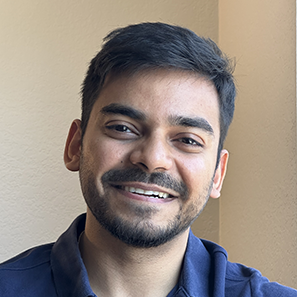
Abhishek Moitra
Assistant Professor, School of Electrical Engineering and Computer Science.
Abhishek Moitra earned his Ph.D. from Yale University in 2025. His research explores hardware-algorithm co-design for scalable vision-language AI workloads and brain-inspired neuromorphic computing. He’s also the recipient of the 2025 IEEE TCAD Donald O. Pederson Best Paper Award and the 2024 Bell Labs Outstanding Innovation Award.

Ishaani Priyadarshini
Scholarly Assistant Professor, School of Electrical Engineering and Computer Science.
Ishaani Priyadarshini will be joining the School of Electrical Engineering & Computer Science at Washington State University in Fall 2025. She specializes in Artificial Intelligence, Data Science, and Cybersecurity. Priyadarshini earned her M.S. and Ph.D. in Electrical and Computer Engineering from the University of Delaware, followed by a postdoctoral scholar appointment at the University of California, Berkeley, where she also served as faculty, teaching applied machine learning to data science and cybersecurity students. She has taught data science courses through the Washington State Board for Community and Technical Colleges, served as a Data Science Course Facilitator at eCornell (Cornell University), and as a Data Science Instructor at Stanford University. As an active researcher, she has published in reputable journals, authored and edited books with leading publishers, and served as a guest editor for several special issues in the field. She is passionate about AI for Social Good, interdisciplinary collaboration, creating equitable opportunities for learners from all backgrounds to grow as future AI leaders, and bridging the gap between research and real-world applications through education.
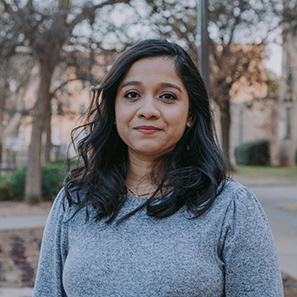
Apoorva Rane
Assistant Professor, School of Design and Construction.
Apoorva Rane is an Assistant Professor of Interior Design and Wisconsin registered interior designer (NCIDQ), who firmly believes that education and research not only complement but also necessitate each other. Her work focuses on the health and well-being of indoor occupants, integrating human-centered design to shape built environments through cognitive, environmental, and cultural knowledge. Driven by a multidisciplinary approach, her research is dedicated to addressing the evolving needs of communities through compassionate design solutions that create measurable, lasting impacts. She strives to enhance built environments—particularly healthcare spaces—by advancing sustainability and understanding how place influences people and processes. Her research has been published in several peer-reviewed journals, including Journal of Patient Safety, Health Environments Research & Design (HERD), and Sustainability. Additionally, she contributes to the academic community as a reviewer for the Journal of Interior Design and Health Environments Research & Design (HERD) journal.

Shauni Priyam Sikder
Assistant Professor, School of Design and Construction.
Shauni Priyam Sikder is an architectural designer, educator, and researcher whose work bridges traditional knowledge with contemporary urban challenges. She is serving as a Scholarly Assistant Professor (Career Track) in the School of Design and Construction at Washington State University bringing extensive international experience across academic, professional, and research domains.
Her teaching and scholarship span both Modern and Classical architectural traditions, with a focus on equitable housing, vulnerable urban landscapes, and culturally grounded, climate-responsive design. She integrates community engagement, ecological thinking, and inclusive pedagogy into her approach to design and education.
With over four years of professional experience, Sikder has contributed to projects in the U.S. and Bangladesh through roles at Rugo/Raff Architects Ltd., Solomon Cordwell Buenz, and several studios in Dhaka and Khulna. Her portfolio includes heritage restoration, high-end residential, student housing, and socially driven urban projects.
She earned her Master of Architectural Design and Urbanism from the University of Notre Dame, receiving the “Rambusch Prize” for her work on the Langalbandh Pilgrimage, reimagined as a spiritual and ecological sanctuary. She also holds a Bachelor of Architecture from BUET, Dhaka, Bangladesh. Prior to her graduate studies, Sikder served as a Lecturer at Khulna University of Engineering & Technology (KUET) for over two years.
Her scholarly and creative work has earned both national and international recognition, including the “2024 Student Grand Prize” from the Congress for the New Urbanism (CNU). Her research and design projects have been featured in academic conferences, international exhibitions, and publications, reflecting her commitment to architecture that is context-sensitive, environmentally responsible, and deeply human-centered.
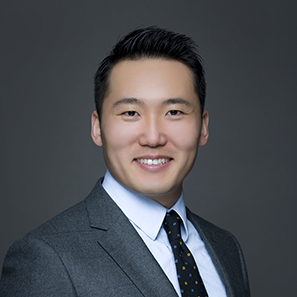
Zhijie Wang
Assistant Professor, Department of Civil and Environmental Engineering.
Wang’s research focuses on advancing the resilience and sustainability of geotechnical systems in both the built and natural environment. He integrates multiscale computational modeling, physical experimentation, sensing technologies, and artificial intelligence to develop next-generation digital twins of infrastructure—systems that are adaptive to environmental change and provide decision support throughout their life cycle. Wang earned his Ph.D. in Civil Engineering (Geotechnical) from the University of Michigan, Ann Arbor, and his M.S. and B.S. in Civil Engineering from Zhejiang University, China. Prior to joining WSU, he was a Postdoctoral Associate at the University of Pittsburgh. In addition to his academic background, Wang brings over five years of industry experience at a Fortune Global 500 company, where he led initiatives in land acquisition, property development, construction automation, and smart supply chain systems across both the U.S. and China.

Qihui Yang
Assistant Professor, School of Engineering and Applied Sciences.
Qihui Yang specializes in research on network science to develop computational models for identifying vulnerabilities in complex systems against security threats and enhancing disaster preparedness. Prior to joining Washington State University Tri-Cities, she served as a Research Assistant Professor in the Department of Electrical and Computer Engineering at Kansas State University. She holds a Ph.D. in electrical and computer engineering from Kansas State University, master’s degrees in electrical engineering from Harbin Institute of Technology, China, and in engineering policy and analysis from Delft University of Technology, the Netherlands, and a bachelor’s degree in electrical engineering from Harbin Institute of Technology, China.